
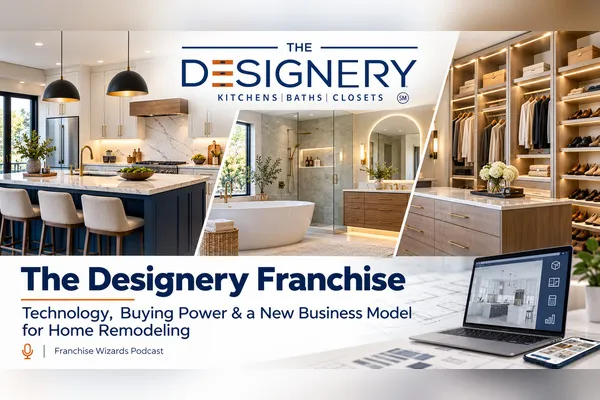
The Designery Franchise: Bringing Technology, Buying Power, and a New Business Model to Home Remodeling
How a kitchen, bath, and closet franchise is making the remodeling industry accessible to entrepreneurs without construction experience.
When most people think about the home remodeling industry, they picture contractors, construction crews, complicated installations, and projects that require years of technical experience.
But what if you could build a business in this industry without being a contractor, an architect, or an interior designer?
That's one of the most interesting questions I explored during my recent Franchise Wizards Podcast interview with Casey Ridley, Founder & President of The Designery, a franchise specializing in kitchen, bath, and closet solutions.
Our conversation revealed a business model that combines comprehensive home improvement products, streamlined operations, sophisticated technology, and centralized franchise support.
And for corporate professionals exploring business ownership, there are some particularly interesting lessons.

A One-Stop Shop for Kitchens, Baths, and Closets
The Designery specializes in cabinetry and the complementary products that bring remodeling projects together, including countertops, flooring, tile, appliances, and storage solutions.
The company's business model developed from a simple observation.
When Casey began building his original cabinetry business, customers frequently asked for other products to complete their renovations. Rather than sending those customers elsewhere, he expanded the offering.
Today, The Designery aims to provide a more comprehensive solution for kitchen, bathroom, and closet projects.
For franchise owners, this creates opportunities to serve multiple customer needs within one project and potentially increase the value of each customer relationship.
It also provides an opportunity to serve two distinct markets: homeowners remodeling their spaces and business customers such as contractors, builders, remodelers, and developers.

The Franchise Advantage: Buying Power and Established Relationships
One of my favorite parts of our conversation was Casey's explanation of the importance of vendor relationships.
When he operated his original business independently, he faced a familiar challenge: suppliers weren't always willing to work with a small company.
Some manufacturers turned him away. Others offered pricing that left limited room for competitive margins.
It took years of relationship-building, negotiations, and business growth to establish stronger purchasing terms.
Today, The Designery works with an established network of vendors, coordinating product quality, training, manufacturing relationships, and purchasing arrangements.
These resources support individual franchise owners who might otherwise have to build those capabilities independently.
This is an important distinction between starting a business from scratch and joining a franchise system.
When evaluating a franchise, you're not simply evaluating the brand. You're also evaluating the systems, supplier relationships, operational processes, and purchasing infrastructure that support its owners.
Not every franchise offers the same advantages, but The Designery provides a useful example of how those capabilities can be built at the franchise-system level.
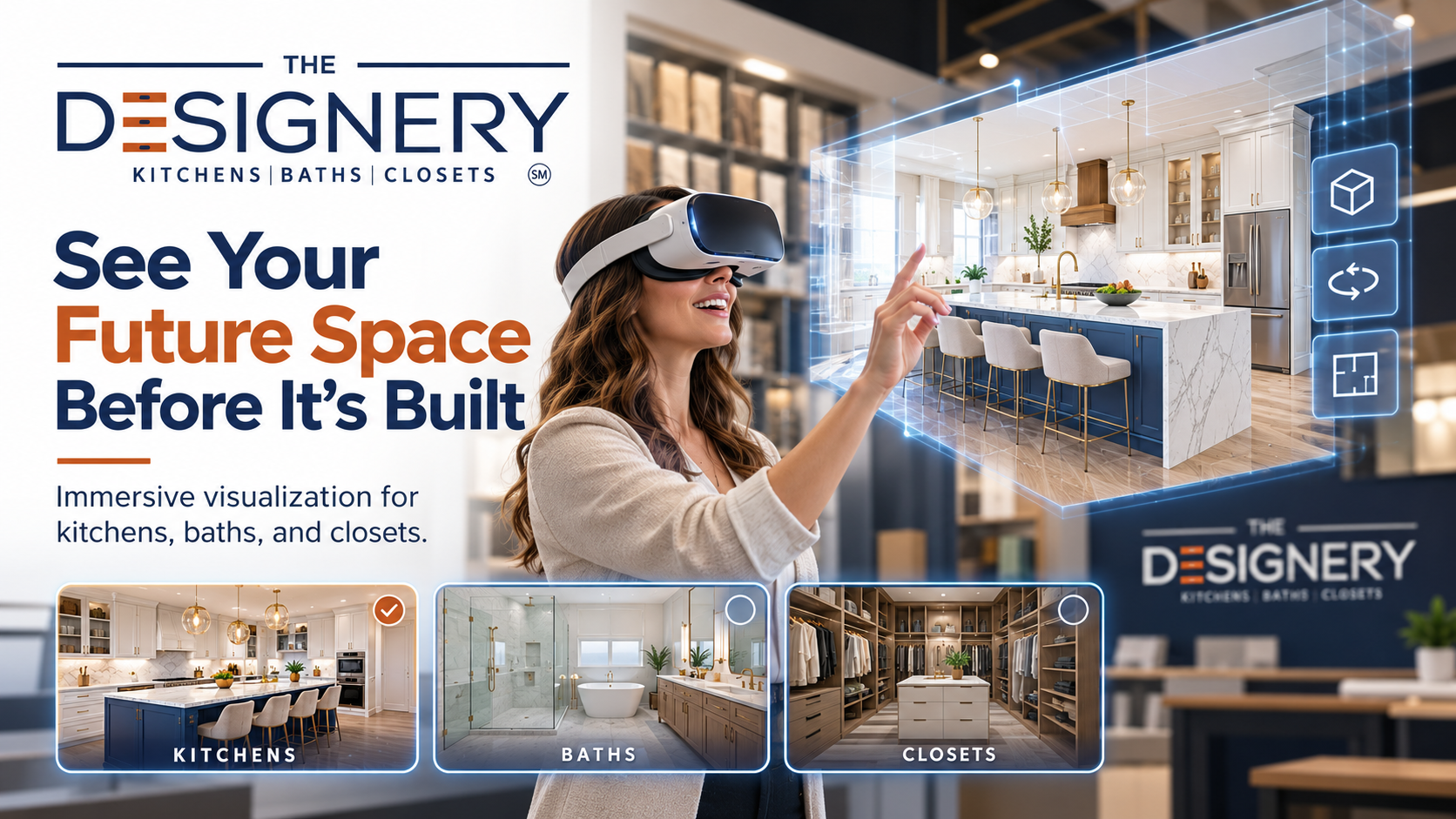
Virtual Reality: Helping Customers Experience Their Renovation Before It's Built
Perhaps the most exciting technology we discussed was The Designery's use of virtual reality.
Imagine walking into a showroom, putting on a VR headset, and stepping inside your future remodeled kitchen.
You can see where the cabinets will go, visualize countertops and flooring, and discuss design changes before construction begins.
That's the experience The Designery offers customers.
Casey shared a memorable story about an architect who initially dismissed the technology as unnecessary. His wife tried the headset first and was amazed by the experience.
When the architect finally tried it himself, his reaction changed completely.
According to the franchise owner, the VR experience was an important factor in helping secure the project.
Beyond its visual appeal, the technology addresses a real customer challenge: making an expensive remodeling decision when it's difficult to envision the finished result.
VR can help customers understand proposed designs, communicate preferences, and feel more confident about moving forward.
For franchise owners, it can also become a valuable sales and customer-experience tool.
And from a franchising perspective, it's another example of technology infrastructure that can be made available across a network of independently owned locations.
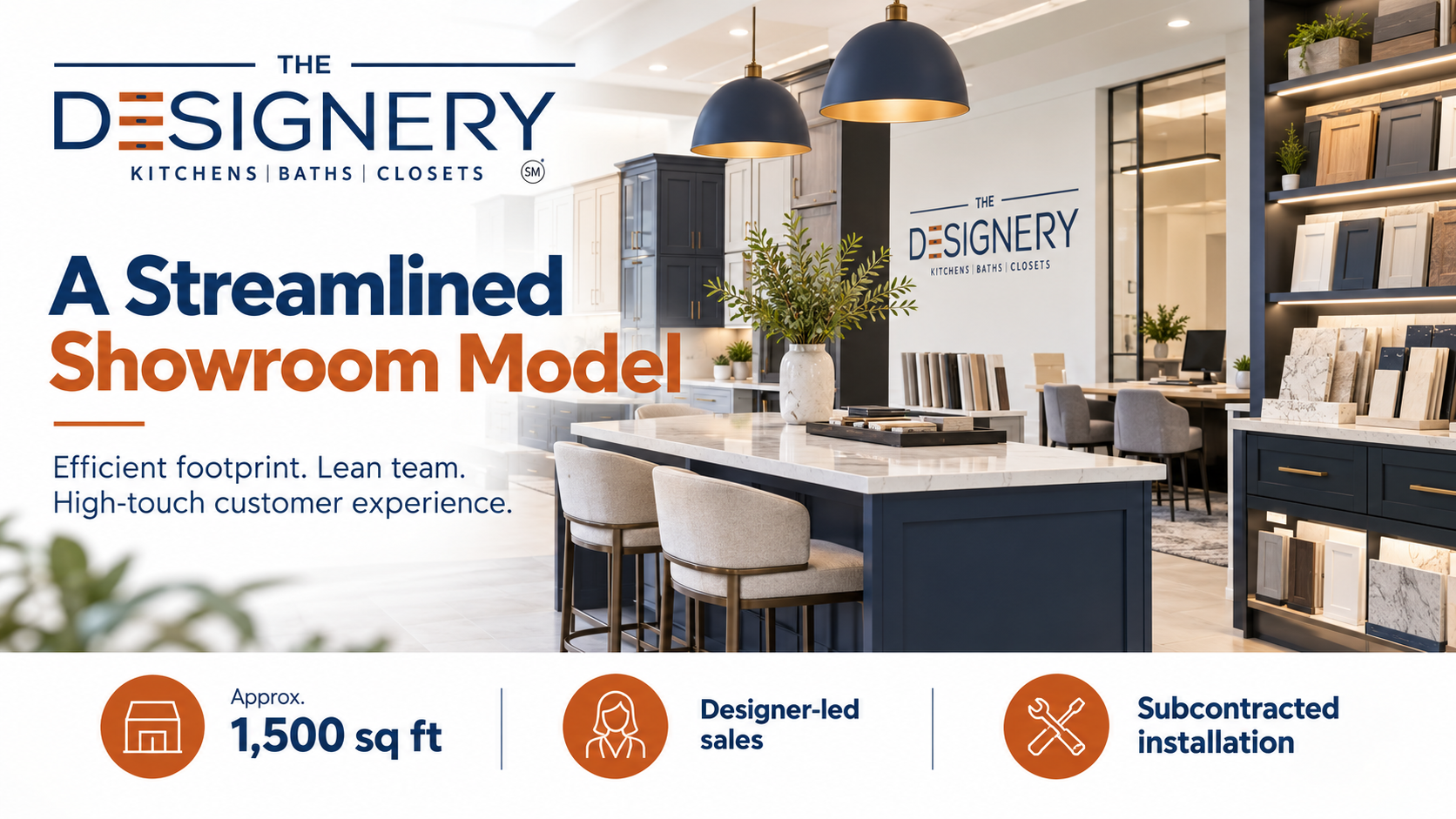
A Streamlined, Showroom-Based Operating Model
Another aspect that caught my attention was how The Designery organizes its day-to-day operations.
Unlike traditional construction businesses that may require extensive equipment, warehousing, and large installation teams, The Designery uses a studio or showroom model.
Casey described a typical showroom of approximately 1,500 square feet, although actual footprints vary by market and location.
A starting team may include a general manager, who can sometimes be the owner, and a designer responsible for sales, design, and elements of project management.
Installation work is frequently handled by subcontractors initially, with staffing evolving as the business grows.
The franchise also provides technology for customer relationship management, design, pricing, vendor coordination, and business performance monitoring.
The objective is to create a more structured operating environment in which owners can focus on customer relationships, sales, team leadership, and business development.
This does not eliminate the complexities of running a remodeling business, but it offers a different approach to managing them.
Two Customer Channels: Homeowners and Business Relationships
One of The Designery's attractive business-model characteristics is its ability to serve both business-to-consumer (B2C) and business-to-business (B2B) customers.
The B2C side includes homeowners looking to renovate kitchens, bathrooms, and closets.
The B2B side includes relationships with builders, contractors, property managers, developers, and other professionals who may have recurring project needs.
Casey explained that franchisees can initially focus on the customer segment that best matches their strengths.
Over time, he encourages a more balanced customer mix, potentially around 50/50 or 60/40 between the two segments.
The rationale is that homeowner projects and contractor relationships can contribute different advantages, including project margins, purchasing volume, and consistency of opportunities.
For entrepreneurs with strong business development and relationship-building skills, the B2B component may be particularly interesting.
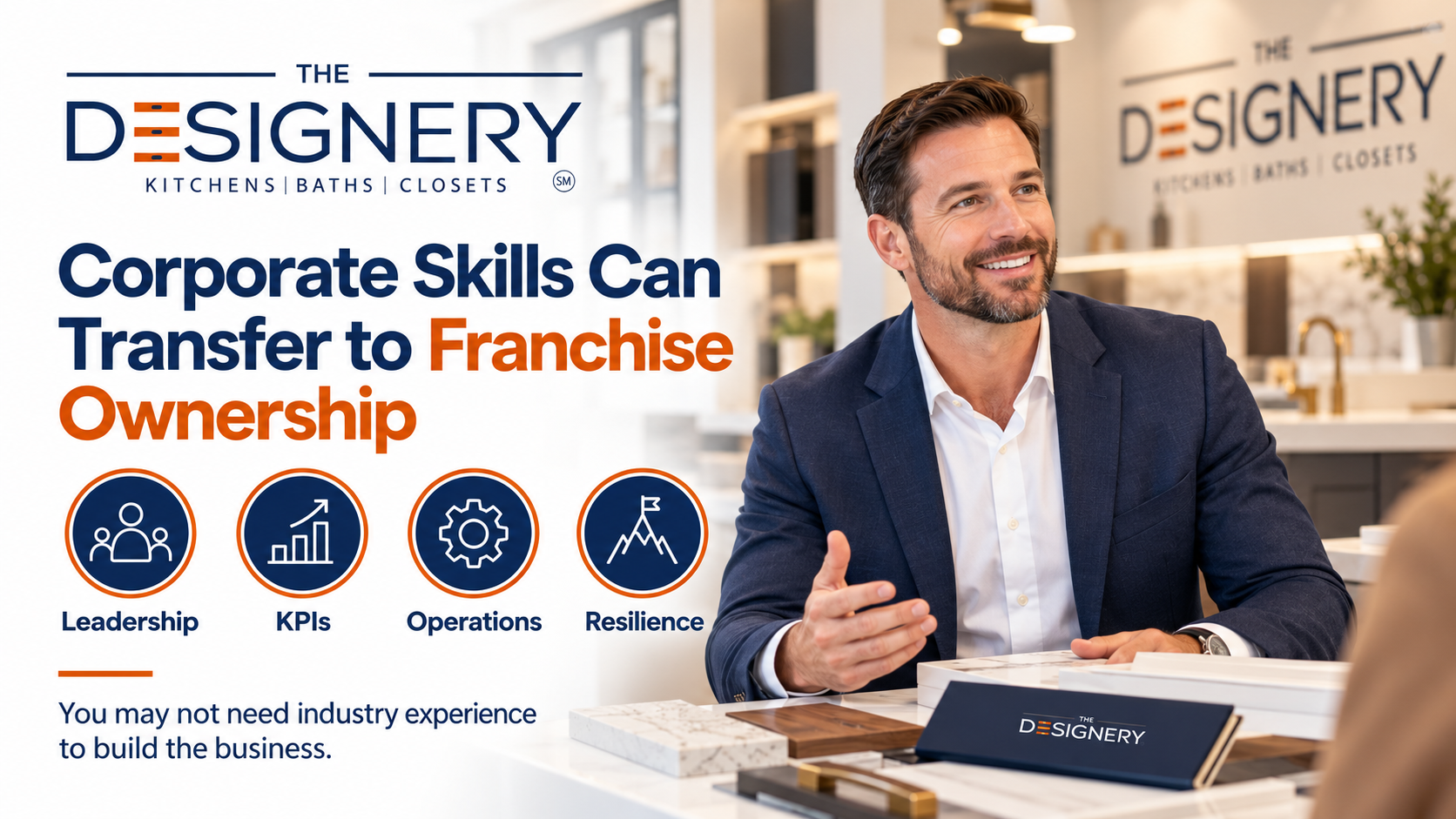
No Construction Background? Your Corporate Skills May Be More Important
This was one of the most relevant portions of our conversation for professionals considering a transition from corporate employment to business ownership.
Many aspiring entrepreneurs assume they must have direct industry experience before investing in a business.
But Casey explained that The Designery doesn't necessarily look for franchise owners with construction or interior design backgrounds.
Instead, he values capabilities such as leadership, team management, operational discipline, understanding KPIs, and following established systems.
These are skills many professionals spend decades developing in corporate careers.
Of course, licensing and installation requirements vary by state and by the work being performed, so prospective owners must understand the requirements in their specific market.
But the broader message is important:
You don't necessarily need to be the technical expert delivering a service to own and manage a business that provides it.
Casey added one characteristic that he considers especially important: resilience.
Business ownership is challenging. Even with franchise training and support, owners face setbacks, difficult decisions, and unexpected obstacles.
The ability to navigate those challenges is essential.
What Does It Cost to Open a Designery Franchise?
According to the franchise materials provided for our review, The Designery's estimated initial investment ranges from $223,739 to $463,439, including the initial franchise fee and applicable startup costs.
The materials also identify:
Required liquid capital: $150,000
Required net worth: $500,000
Single-unit initial franchise fee: $59,900
Actual investment requirements depend on the location, buildout, operating model, and other factors.
Casey also discussed financial performance information contained in the company's Franchise Disclosure Document (FDD), including project economics and sales-related metrics.
Prospective franchisees should carefully review the current FDD, particularly Items 7 and 19, and speak with existing franchise owners to better understand the investment, operating expenses, financial performance, and potential risks.
Importantly, accepted contract amounts, recognized revenue, and owner earnings are different financial measures and should not be treated interchangeably.
A Growing Franchise With a Multi-Unit Focus
The Designery is part of the HomeFront Brands family of franchise companies.
According to its September 2026 franchise development newsletter, The Designery had awarded more than 135 territories and reported 55 unique locations, with more than 30 showrooms opened at the time of publication.
The same newsletter highlighted expanding product categories, new vendor relationships, and a National Partners Program targeting larger commercial customer opportunities.
It also emphasized a growing focus on multi-unit ownership, with multi-unit development requirements in certain mid-sized and larger markets.
These developments highlight the importance of evaluating both the local market opportunity and the franchise system's long-term development strategy.
Territory availability and franchise offering requirements are subject to change.
Final Thoughts: An Interesting Combination of Traditional Industry and Modern Business Infrastructure
What stood out to me most about The Designery wasn't any single feature.
It was the combination.
A comprehensive kitchen, bath, and closet offering. An established vendor network. A showroom-based operating model. Opportunities to serve both homeowners and business customers. Technology that helps customers visualize projects before committing.
And perhaps most importantly, a business model that values management capabilities and entrepreneurial resilience over a specific technical background.
For corporate professionals who have spent years leading teams, managing operations, analyzing business performance, and building relationships, that's an interesting proposition worth exploring.
The Designery won't be the right opportunity for everyone. Like any business, it requires capital, commitment, strong execution, and careful due diligence.
But it offers an example of how franchising can provide a pathway into an industry that might otherwise feel inaccessible to someone without direct experience.
And that is exactly the kind of opportunity we enjoy exploring at Franchise Wizards.
🎙️ Watch Our Full Interview With Casey Ridley
Want to hear directly from The Designery's Founder & President?
Watch our Franchise Wizards Podcast episode, where we explore the business model, technology, operations, investment requirements, and franchise ownership opportunities in greater detail.
▶️ Watch the full episode:
https://youtu.be/yeotLNR4na8
🏠 Explore The Designery Franchise
Interested in learning more about the franchise, reviewing investment requirements, or checking territory availability?
Request more information:
https://franchisewizards.com/podcast/lp/thedesignery
🤝 Find the Right Franchise for You
Not sure whether The Designery or another franchise would be the best fit for your background and goals?
Franchise Wizards offers complimentary franchise consulting to help aspiring entrepreneurs explore business ownership opportunities.
Schedule a consultation:
https://franchisewizards.com/contact-us
Or try our AI-powered franchise matchmaking tool to discover opportunities aligned with your experience, goals, and investment preferences:
https://franchisewizards.com/vsl3-best-franchises
About the Author
Sheila Purim is a franchise consultant and co-host of the Franchise Wizards Podcast, where she and Daniel Purim interview franchise founders, executives, and industry leaders to help aspiring entrepreneurs better understand business ownership opportunities.
Disclaimer: This article is for general informational purposes and is not an offer to sell a franchise or a guarantee of financial performance. Franchise information and investment figures are based on materials supplied by The Designery and may change. Franchise offerings are subject to applicable state and federal requirements. Prospective franchisees should review the current FDD, conduct independent due diligence, speak with existing franchise owners, and consult qualified legal and financial advisers before investing. No particular revenue, profit, or investment return is guaranteed.
Franchise Wizards does not guarantee financing, profitability, business performance, territory availability, or investment outcomes.← Back to Learning Center